Showing posts with label Nissan 370Z. Show all posts

29.8.09

As American As Hot Dogs And Baseball: The 2010 Chevrolet Camaro

As far back as I can remember I have always been a gear head. My mind is constantly churning with thoughts and images of automobiles.

Source: rp

To really capture the essence of the obsession, a close friend – who I have had the pleasure of knowing since kindergarten – summoned an old memory. He said that he remembers us on a third grade trip in New York City. While we were passing through the Lincoln Tunnel, I leapt up and pointed to a dark Mercedes-Benz: “That’s a CL600, do you know how rare that is?!” Then I proceeded to inform the chaperone just how expensive and luxurious it was. Yeah, I was that guy.

For me, there has always been a slant towards European automobiles. “Give me the Germans and Italians,” I would always say.

But the U.S. manufacturers never tickled my fancy. Even with their burbling V8s making a racket, I never looked twice. Eventually as things heated up in auto journalism and I got a chance to get behind the wheel of a handful of vehicles that were as ‘Merican as a hot dog and baseball, the realization was clear: they are not that bad – when they are not half-assed. In fact, I began to like them, faults and all.

Source: rp

A huge reason that shunned me away from them was the sub par image of American cars. Lackadaisical designs and lethargic interiors were the norm and on top of this reliability seemed questionable. Owning an American car essentially sent a message to the world that you had no regard for your automobile.

Until now, that is.

After being on a hiatus, the Camaro is back. Looking into the storied history of this icon is like watching Elvis’ downward spiral from his humble roots to his flashy, bloated and early death. But this Camaro actually looks like a Camaro and it performs like one too. It is pretty obvious this is not a lame attempt to create a muscle car.

What is magical about the 2010 Camaro is how it looks. Long and wide, it bears quite a menacing stance. Both of my testers, shod with 20’’ + rims, look as though they are artist sketches with their proportions. This is not a bad thing, considering that most cars look best in their initial sketch.

The sexy, traditional lines manage to not go unnoticed either. During my two weeks with the LT and SS versions involved more head turns than just about any car I have ever had. This includes an Audi R8, which is one of the most unique looking vehicles on the road today.

Countless times I was getting shouted at: “Nice car, man!”

Interestingly enough, there was no particular age group that was more drawn to the car. Everyone was interested. At one intersection I counted nearly a handful of gawkers and a couple of individuals stopped to inquire about the car. Mind you this is a 20 second light!

Source: rp

This speaks volumes about the design and how striking it is. The only element that I find a blunder with are the three horizontal lines located in front of the rear wheel. Although it seems that they were thrown into the design to make the Camaro appear shorter, it would come off much cleaner if they were not included. C’est la vie. Rarely is a design perfect, but the Camaro comes pretty damn close. My favorite part of the car has to be the rear quarter where the “hips” are reminiscent of a woman’s sensual figure.

One major thing that stood out was the flimsy front clip. The front valence, grille and the grille surround appear to be made of a composite plastic or something similar because it feels as though given enough force you can rip off the front of the car. Likely this was done to make the car lighter, but if you bump the front of the Camaro, it will be nearly impossible to avoid breaking just about everything.

Source: rp

Situating yourself into the driver’s seat, it is pretty clear that the retro theme continues throughout the interior. An interesting design feature is the gauge cluster positioned on the center console. Although it is greatly appreciated to have those particular instruments, their position is way off from eye level, so checking levels is reserved to when you are at a stop. I like to think whoever penned this idea had a little sense of humor since my automatic Camaro had a “Transmission Temp” gauge.

Peeking around the other details of the cabin, it is noticeable that this car is unbelievably similar to the concept that was shown to the public. Of course, minus the swaths of leather and expensive metals that adorned the concept’s interior.

Source: rp

One thing that did not get left out is the large piece of plastic that covers the door panels and wraps upwards into the dashboard. Although it manages to look pretty cool at night with its aqua ambient lighting, it just feels terrible. This seems to be the theme for the interior: looks good, feels cheap. The center console’s painted plastic feels as though a fingernail could scratch it and there is a large, hollow spot in the dash directly in front of the passenger’s seat.

Another concern includes the ultra low roofline, which gives the Camaro a “chop-top” look, takes away significant headroom, front and rear. If the seats were not positioned so low, it would be even more of a problem. You can theoretically fit four people inside but your two rear passengers will hate their lives if they are over 5’11. Passengers put into the back seats complained that there was no headroom and they continuously bumped their heads into the headliner. Personally, it does not bother me too much, but for buyers thinking the back seat means practicality, think again.

Another issue that is commonly mentioned is the huge blind spot, thanks to the c-pillar. Thankfully, the Camaro is equipped with extremely wide mirrors that provide excellent field of vision. If they are not doing the job, you do not have your mirrors adjusted properly.

Source: rp

Although some of these design misgivings play a big role in how good a car is, for the Camaro, it is more important that it performs.

Equipped with three motor choices, the LT has a 3.6 liter V6 producing 304-horsepower and 273 lb-ft of torque. The SS’ get a bit more difficult because the automatic SS comes with a 6.2 liter, 400-horsepower LS3 derivative making 410 lb-ft of torque, while the manual comes with the LS3 V8 putting out 426-horsepower and 420 lb-ft. Coupled with these aggressive engine options are a Hydra-Matic six-speed automatic with TAPshift, in the LT, and a traditional Tremec six-speed manual in the SS.

The auto gearbox works just about as good as any driver should expect an auto to perform. The buttons on the back of the steering wheel provide up and downshifts in an acceptable pace, but it is not nearly as quick as a DSG sytem or Lexus’ IS-F eight-speed tranny.

On the manual, throws are relatively short and getting into gear happens with ease. The clutch has plenty of takeup so there is room to work with, unlike Nissan’s 370Z that provides a fraction of space. Overall, the manual is easy to work with and easy to drive compared to other contemporary manuals.

Source: rp

Fuel wise, the Camaro LT is not a tremendous drinker. With an enormous 19 gallon tank and an average of 19 MPG, the LT can get some impressive mileage between stops. The SS on the other hand is a bit thirstier, averaging 15 and a half MPG during real-world testing.

The two motors I tested, the V6 and LS3, both have totally separate characters – as expected. The V6 sounds eerily similar to the recently retired Infiniti G35 motor. Although it seems pretty downplayed from inside the cabin, it has a loud babbling note, which lacks a bass-like grunt. The grumbly V8, on the other hand, was the motor you would expect a proper Camaro to have. Deep and filled with plenty of grunt, the exhaust note became an object of my affection. On the overrun, expect to hear pops.

Alas! An American auto builder that can produce an efficient six cylinder. The LT’s V6 is a capable powertrain, propelling the large, 3,700 pound coupe to 60 MPH in about six seconds. If you require more power, speed and rumble, the SS can get you to 60 – with a lot of drama – in just over four and a half seconds. Mind you the SS tips the scale at just about 3,850 pounds. She is not a lightweight.

Source: rp

Knowing that the Camaro was not exactly on the Atkins diet, one would expect it to be a sloppy handler but it is not. Putting it through corners is not too hard as body lean is limited and grip is aplenty due to the large rear tires. The adequately bolstered seats keep you just about in place and ensure that your attention is where it matters most, the road.

A grievance I have with the 2010 Camaro is its steering feel. Weighting on the lighter side makes it easier to drive but it is not quite as direct as I would like it to be. Granted, I know this is a muscle car. At speed, the Camaro requires more attention than I expected, acting somewhat twitchy.

Probably the most impressive element of the car is its suspension. Through corners it is tight and stiff, and during elevation changes it remains glued to the tarmac. Even taking the V6 through a test road, nicknamed “Rollercoaster Road,” provided an entertaining, adrenaline-filled experience. The kicker is that it is restrained from going too far. You can take the car into rough pavement and it will hold up without punishing your backside.

This brings up good point about the Camaro; it is not a raw car. It is relatively refined, in my eyes. The first time I got it sideways I did not even realize. It is a remarkably isolated experience. Between the high dashboard, high shoulderline and low roofline, I felt like I was peering through a mail slot. I loved it.

Coming to a slow, I had a peculiar experience in my LT tester. To be frank, the brakes were terrible. Perhaps it was the added weight from the 21 inch rims because the car had less than 2,000 miles on the odometer. Here’s the twist though: when I was at a GM event in Detroit recently, I drove the LT Bumblebee edition and the brakes were superb. They were easier to modulate and bit was at least 10 times better. The LT was set up with 12.64 inch rotors in the front and just under 12 and a half inches in the rear. Both front and rear are suppressed by one piston calipers.

The hardcore performance SS, meanwhile, is furnished with Brembo-sourced 14 inch rotors up front and 14.4 inch rotors in the rear. Clamping these are four piston calipers, front and rear. Stopping power is dramatically upped and pedal feel is more instant. The Brembo brakes enjoy a more significant amount of bite.

Source: rp

The real test came at the end of my time with the 2010 Camaros. I was not saying “thank God,” instead I was saying “bummer.” I thoroughly enjoyed my time with both cars and for a former Europhile this further proves that the American auto builders are improving.

Do not get too excited though, the Camaro had its fair share of faults. For instance: the LT was fitted with a body kit that was not quite attached so firmly on the passenger-side front valence, the hollow passenger-side dashboard, mismatched paint between the front clip and hood panels. Whether or not it was an early production model is inexcusable. And, it seems that further research has turned up a bevy of issues with new Camaros. Click here to see exactly what I am talking about.

What I can report, however, is that the latest Camaros I have seen appear to be built with a higher level of care. For instance, my SS tester was a bit more solid than the LT I had driven.

Although it will take time for those improvements to be made, it is nice to see that the Americans have finally cracked it; it is a very desirable car to own. Further proof of this is seen through the sales numbers that point to the Camaro essentially propping up Chevrolet sales.

Lastly, GM did one thing I never thought possible. Made me proud of the American car I was driving.

~nz

rp

Want more updates?

Follow along at twitter.com/rposluszny


30.6.09

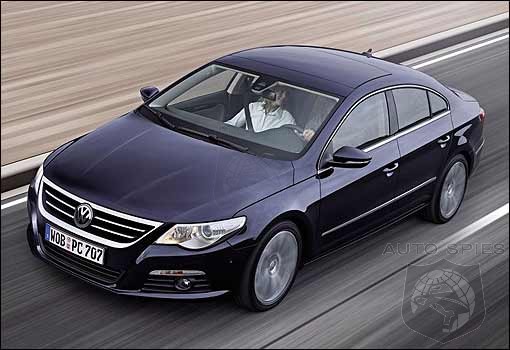
REVIEW: VW Passat CC VR6 4Motion

Four doors. Coupe. What do the two have in common? Apparently, a lot. What was once thought to be separate identities has now become one, thus the birth of the four door coupe. But I still do not understand how it is possible for a four door sedan to be called a “coupe.” So, I did what any rational first grader would do; consult the dictionary.

According to Merriam-Webster, a “coupe” is either “a four-wheeled closed horse-drawn carriage for two persons inside with an outside seat for the driver in front.” Or, “a 2-door automobile often seating only two persons; also: one with a tight-spaced rear seat.”

Source: rp

I see the keyword being two doors but Mercedes-Benz saw it differently with their marketing blitz of the CLS, which touted its likeness to classic, Mercedes coupes. It appeared to be a stretched E-class with a sloping roofline and a graceful rear-end. In my eyes, it was merely a mash-up of an E-class and CL, but, it had some funky headlights.

Coupe or sedan, it did not matter because it was damn good looking.

Previous four door coupes like Mazda’s RX-8 and the Saturn Ion featured shady rear doors that were reminiscent of those long, unsophisticated Ford E350’s. Not cool. The CLS was different and brought sexy back.

This translated into sales rocketing forward and a new niche becoming born. Instinctively, other auto builders joined up by sketching out ideas and concepts, which soon made their appearance at auto shows.

Source: rp

Bringing us neatly to the Volkswagen Passat CC.

Volkswagen’s CC is a triumph of styling pleasure. From the graceful, sloping roofline to the two-tone interior, it is a car that I can liken to a svelte supermodel. And, its more conservative details make this a better looking car than a Mercedes CLS.

Not that it matters because to the untrained eye people mistake this for the CLS, although it proudly wears its VW badges.

Source: rp

Every line is executed perfectly as though it is flowing from the front fascia to the rear quarters. Easily the most interesting line on the car happens to be on the top of the rear windscreen, which arches in an elegant manner – reminiscent of a Mercedes CL windscreen that has been translated in a more conservative fashion.

There are only two aspects of the car’s exterior that are bothersome.

Source: rp

First, are the unnecessarily large, wraparound taillights. I think the rear could have been capped off with a more conservative integration with flush LEDs a la the current Passat.

Secondly, the unfinished rear tailpipes. Not chrome or brushed aluminum? Shouldn’t a car of this caliper have this standard rather than shell out another $150 on top of $42,630 as observed on our test car?

Source: rp

Ironically, the interior of the CC boasts an extreme attention to detail. Look around the interior and it feels as though you are in a hip and trendy espresso bar. Brushed aluminum surrounds the cabin with fine, aluminum details in-between the door grabs. At the top of the bolstered sport seats is a gap that is bridged with a tiny piece of Alcantara. Since this is a “coupe,” there is seating for two in the rear but this suave Passat has bolsters in the rear seats providing more a bucket seat feel. In addition to all of this, there is a contrasting stitch that provides a subtle pop to the interior that makes Marc Jacobs envious.

Source: rp

Rest assured, although there is aluminum and a trendy café feel, it is warm and inviting. Light splashes in from the panoramic sunroof and a high beltline makes a driver feel as though they are in a cockpit.

Fit and finish is exceptional with tight panel gaps and no rattles over rough terrain. This is a substantial change from my 2004 Touareg, which had panel gaps as wide as the Atlantic Ocean and had several rattles throughout the cabin.

Source: About.com

On the technology front, Volkswagen has finally stepped up to the plate with a proper navigation system. After years of poorly developed systems, the firm has chosen to utilize a 32 gigabyte hard-drive based, touch screen unit with what VW calls a Media Device Interface. So, if you change the climate control to flow differently it pops up on the navigation screen and makes sure you are aware of it. Also integrated into this unit is the vehicle’s rear view camera.

Using the new unit is remarkably easy albeit accompanied with slight lag when you overload it with inputs. Besides confusing the Garden State Parkway’s direction on the final night I was testing, it performed well with timely route calculations and recalculations.

Source: Motorreport.com.au

So, now that we know it is a well built car accompanied by jaw dropping looks, let’s drive it.

CC’s can be equipped with either a four-banger 2.0T or the Van Wilder of engines, the infamous VR6 that now has been upped to 3.6 liters. The turbo is good for 200-horsepower and 207 lb-ft of torque while the inline six is rated at 280-horsepower and 265 lb-ft of torque. But the VR6 is lacking in one element; sound. It does not have that prominent burble as heard in the early Touaregs and R32’s. Rather it sounds anemic and at low speeds a whiny transmission overtakes all of the motor’s pleasantries.

And this power does not mean you get a paltry MPG. With a solid mix of highway and city driving, I ended up with nearly 19 MPG at the end of one week with the CC.

Source: rp

Shifting gears in the über sex machine is a six-speed tiptronic automatic. Although the six cylinders have some grunt, it is unfortunate the VR6 is not available with a dual-clutch or traditional manual gearbox. Most likely these other transmission options would have improved the quick, but not fast, 0-60 MPH time of 6.2 – as claimed by VW. Shift times have improved over previous tiptronic generations and are acceptable, but remain no match for a DSG transmission at the end of the day.

Regardless, the CC is deceptively quick due its suppressed road noise and luxuriously tuned suspension that isolates you from the road’s craters. I had the pleasure of figuring this out while doubling a neighboring village’s speed limit and getting pinched.

The car’s ride is smooth as glass and when you get caught in one of New York City’s clusters of potholes you will soon find yourself drifting over the potholes and not taking lumps on the top of your head. Surprisingly, although the suspension has been tuned to take bumps, it does not float or wobble on the highway at speed. It remains relatively taut and confidence inspiring.

The more time on the highway I spent with the CC the clearer it became it is a very good grand touring car. But, how would it do in the curves? After taking it through some twisties, it was also obvious it is not a sports car. Weighing in at 3,854 pounds, the car is not a lightweight and you feel it through the corners. Heavy body roll is apparent through cornering. Coupled with the 4Motion system, grip is there but at the limit traction dissipates and understeer rears its ugly head.

Source: rp

Steering is boosted heavily at low speeds so low speed maneuvers can be achieved with the touch of a pinky, but at high speeds the steering becomes much heavier to ensure poise in the fast lane. This makes the CC a flexible and easy-to-drive car. While steering feel is numbed out as though the steering wheel has been injected with a shot of Novocain, it remains relatively direct to the touch. Granted, it is not as sharp as say a Nissan 370Z or Mitsubishi Lancer Evolution X.

When coming to a stop, brake pedal feel could use some sharpening up. After getting through some unresponsive feedback, the brakes come alive. Once again, a notion this car is not quite as sporty as a “coupe,” should be.

Which is the bottom line, really. The CC is a great car and fulfills its goal of being a sportier, upscale “regular” Passat. But you cannot expect it to perform extraordinarily well outside of the bounds of a GT car. To draw a comparison, it drives similarly to the 2010 Mercedes E-class.

Whether or not people will consider this a “poor man’s CLS,” is beyond me. However, I did feel a bit like a poser with the CC. But, I would rather feel that than blend into the crowd in the all too commonplace BMW 3-series or Mercedes-Benz C-class in this price point – this is VW’s niche, being different.

Personally, I would take the half-priced supermodel over the girl next door any day.

rp

12.6.09

Cheap Thrills: Nissan 370Z Leads The Pack

An exhaust note can tell a lot about a car. The Nissan 350Z had a unique, burbly soundtrack but it was relatively weak. While driving the new 370Z, it became clear the exhaust note was fiercer and produced a deeper bellow. It was adjusted and meaner.

This theme has been carried out throughout the new Z car.

Source: Nissan North America

Not only does the 370 feature a new engine, it also has a new transmission, improved fuel mileage, more technology and it is lighter. Considered the “Everyday Sports Car,” the new Z is something to behold, especially when it has been fine tuned.

Read more here.

rp


24.12.08

Nissan Viewing: Part II

So, let’s get down to brass tacks. This is the car everyone was here for, the new Nissan 370Z.

Source: rp

Disclaimer: Pictures do not do this car justice. It has to be seen in the flesh to be fully appreciated.

Adorned in a rather loud yellow, the new Z has a rather menacing looking stance. Certainly, this Z is not messing around. While the 350Z remained rather angular and squared off, the 370Z has injected a bit more sexuality and fierceness into its design.

What do I mean?

Looking at the new clamshell roof line, I have fallen in love. Personally, I believe the A-pillar should have remained blacked out, a la GTR and Koenigsegg CCX, to emphasize this new, gorgeous roof line.

Source: Nissan North America

Delving into the side profile and side-view mirrors you will notice that a lot of the sharp edges of the 350 have been smoothed out and gives the car a much more fluid look as opposed to the rigidness of the previous generation. Next, is my favorite aspect of the new 370Z – the C-pillar and how its line retreats upwards. Thank God that Nissan’s designers got rid of that plain, unimaginative beltline, which graced the 350. Whether it is revived from the Datsun 240Z is not important; it just looks good, period.

Walking around towards the rear end of this vehicle reveals a very wide and impressive stance. What is this thing a Testarossa? Christ, it appears that much wider. On top of that, this particular Z was equipped with the optional 19 inch rims, which boasts 10 inch rear tires.

Source: rp

Kudos for imagination.

Now, the most controversial aspect of the design is clearly the headlights and taillights. Nissan public relations claims they are “barbed,” and meant to evoke emotion and blah blah. “Barbed,” or not I am not a huge supporter; however, it is an interesting departure from the Nissan/Infiniti of old, which commonly featured rectangular headlights. For the Z the headlights work; for the Maxima, not so much.

Source: rp

Settling into the cock pit reveals, once again, a smoother and more fluid design. A newly designed steering wheel improves knee room for giants, like myself, and the integration of a navigation unit – pictures show similarities the FX loaner I had – gives the Z a much more Infiniti-like feel.

Source: rp

Source: Nissan North America

Speaking in terms of design, the Z is a major shift. A welcome one, at that. The exterior exudes some characteristics inherited from the Datsun 240Z while the interior has learned a thing or two from its siblings at Infiniti. Well played, Nissan.

Specification wise, the 370 has made improvements in all the right places. The engine has power bump,332-horsepower and 270 lb-ft of torque @ 5,200 revs-per-minute, stemming from a new 3.7 V6.

Most likely the exhaust note will sound very similar to the Nissan/Infiniti’s of late, which have a low-end burble that eventually turns into a shriek.

Optional brakes provide four piston, 14 inch rotors in front while the rear is supplied with two piston, 13.8 inchers in the back.

Source: rp

The new six-speed manual has the world’s first synchronized downshift rev matching system, which essentially eliminates the need for heel/toe action. Have no fear wannabe rally champions, you too can live vicariously through your 370Z by turning off this system VIA a button on the center console. Or, you can keep things simple with a seven-speed automatic boasting paddle-shifting technology. Your call, really.

Overall, the 370 is a tremendous departure from the bland 350. It is much more exciting and has a much improved side profile due to the refresh.

As with the Cube, hopefully, AT will be able to get behind the wheel of one soon.

rp

22.12.08

Nissan Viewing: Part I

After a long hiatus, with good reason as you will see in the upcoming weeks, AT is back!

This past Thursday night, Nissan hosted a nice, little viewing of the updated 370Z and the soon-to-be imported Cube.

Source: rp

The Nissan Cube is exactly what the name says it is, a cube. Although many will likely say the design is reminiscent of a Scion Xb, it has been on the market since 1998 – in Japan. Personally, it does not matter “who-dun-it,” because it is remains a trendy, hip design.

I will be the first to admit the current generation Cube’s design is a bit more appealing; however, the refresh is not a slacker either. Some aspects of the vehicle caught my eye immediately. For instance, the curves on the B-pillar provide a unique touch and are brilliantly executed in a contemporary fashion. And, upon closer inspection the windshield has a slight curvature towards the top, which is nothing less than beautiful.

The coolest aspect of the exterior has to be the rear door, which is hinged on one side. The sleek design reminds me of a hefty, impenetrable bank vault. Although Nissan concealed the hinge with a bulbous bit of sheet metal, I think it would have looked better with an obscenely chunky, aluminum exposed hinge.

Source: rp

Sliding into the cockpit you are confronted with a curvy, meandering dash and a helluva lot of headroom. It is remarkably airy. The A-pillars are placed extremely far in front of you, thus, providing a lot of length between you and the windshield. Essentially, this is totally the opposite of old-school Porsches where you may have felt as though you were wearing the windshield as glasses.

Source: rp

Something that caught my eye was the interesting control set up on the center stack. A circular array of buttons and controls for the HVAC unit. I am curious if that circular set up becomes irritating and confusing while driving and not paying attention to where you are poking or proding.

The underlying problem with this car: it is not a tremendously groundbreaking design after 10 years overseas and many consumers will observe the car’s silhouette and proclaim “it’s just a box!” It is unfortunate that many will overlook the little details this spiffy little car has to offer.

Source: rp

More than likely, this vehicle will sell big with younger crowds who prefer personalization, which is a major selling point of this particular vehicle. Scion should get their ammo ready accordingly as this car felt more solid than their offerings.

My grievance: why wait so long to get this car here?

Hopefully, this coming spring Automotive Times will be able to get behind the wheel and get some serious driving impressions. Time will tell.

To summarize: the Cube is essentially a gigantic iPod with four wheels targeted at the iPod generation.

rp